
Home › Septic Systems › Cost Guide
What Determines Septic System Cost in Central Oregon?
The short answer: there is no honest flat price for a septic system in Bend, Redmond, or anywhere else in Central Oregon. Where your project lands depends almost entirely on one thing: the type of system your county site evaluation requires. After that it comes down to rock, home size, drainfield length, and access. This guide, written by the licensed septic installers at Super State, breaks down how the system types compare, the factors that move the number, the permit process, repair versus replacement, and the handful of decisions that actually save money.
How Septic System Types Compare on Cost
Ranked from least to most expensive to build for a typical three- to four-bedroom home in Deschutes, Crook, and Jefferson counties, counting excavation, tank, distribution, drainfield, plumbing tie-in, backfill, and rough grade. Rock, access, and tank size can move any system up the list.
| System Type | Relative Cost | When the County Requires It |
|---|---|---|
| Conventional gravity system | Lowest | Deep, well-drained soils with good separation from rock and groundwater. Less common in Central Oregon than newcomers expect. |
| Pressure distribution system | Moderate | Shallower soils or coarse, fast-draining ground where effluent must be spread evenly with a pump and small-diameter laterals. The most common upgrade from gravity here. |
| Sand filter system | Higher | Limited soil depth or rapidly draining soils that need pretreatment before the drainfield. Involves a lined filter bed, pump chamber, and more excavation. |
| Alternative treatment technology (ATT) | Highest | Very shallow rock, tight lots, small or poorly suited drainfield areas, and many sites near groundwater or sensitive areas. Adds a manufactured treatment unit, controls, and electrical. |
| Drainfield replacement only (repair permit) | Well below a full system | Failed field with a sound tank. Cost depends on field length and whether the replacement area needs pressure distribution. |
| Tank replacement only | Lowest repair option | Cracked, collapsed, or undersized tank with a working drainfield. Steel tanks and older concrete tanks are the usual candidates. |
These comparisons reflect what we see on Central Oregon projects. Statewide and national cost guides usually understate local costs because they are weighted toward regions with deep soil where gravity systems dominate. Always get a written quote based on your approved site evaluation.
What Actually Drives the Price
1. The System Type the Site Evaluation Calls For
This is the single biggest factor, and you do not get to choose it. The county soil scientist digs test pits, measures soil depth, texture, and depth to rock or groundwater, and the result dictates gravity, pressure distribution, sand filter, or ATT. Everything else is a modifier on that base number.
2. Rock
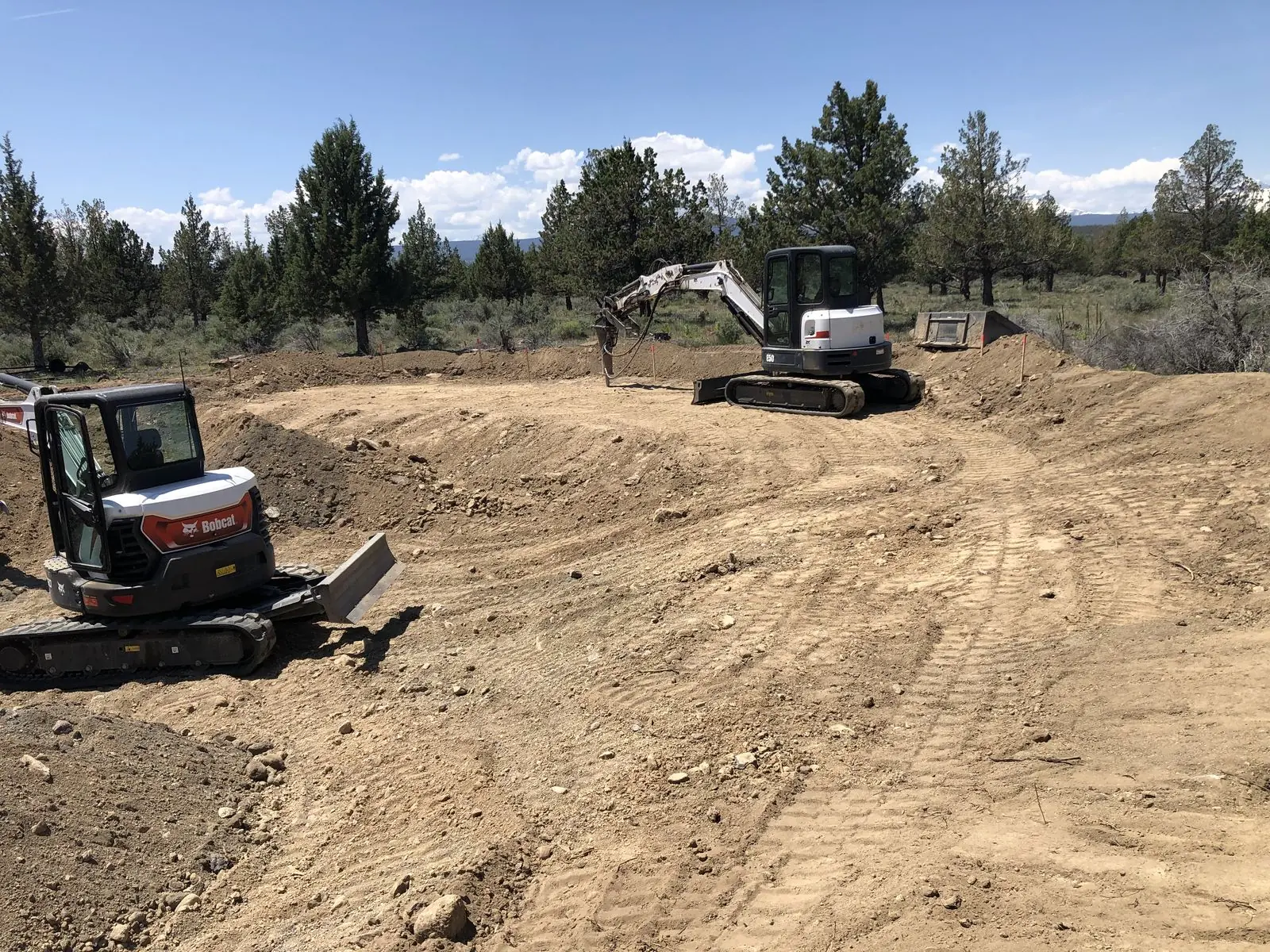
Much of Bend, Redmond, and Terrebonne sits on fractured basalt under a thin skin of soil. Ripping or hammering rock out of a tank hole and drainfield trenches takes bigger equipment and more hours, and the spoils have to be hauled off and replaced with imported material. A rock-heavy site can add meaningfully to the cost of an otherwise identical system.
3. Home Size and Tank Capacity
Systems are sized by bedroom count, not by how many people live there. A five-bedroom home needs a larger tank and a longer drainfield than a three-bedroom home, and the cost scales with it. Shops, ADUs, and guest houses on the same system add to the design flow.
4. Drainfield Length and Layout
Coarse, fast-draining soils sometimes allow a shorter field; marginal soils require more linear feet. Sloped lots, trees worth saving, setbacks from wells and property lines, and a tight building envelope all affect how much trenching is needed and how hard it is to reach.
5. Pumps, Controls, and Electrical
Every system except gravity has at least one pump, a float system, a control panel, and an alarm. ATT units add a treatment unit and sometimes a blower. Running power to the pump chamber is part of the project and is easy to leave out of a lowball quote.
6. Access and Site Restoration
A bare lot during new construction is the cheapest possible condition. Replacing a system in an established yard means protecting or removing landscaping, irrigation, fences, and driveways, then putting them back. We price restoration honestly up front because we are also a landscape construction company and will be the ones doing it.
Permit, Site Evaluation, and Inspection Fees
Every septic system in Oregon goes through the onsite wastewater program administered by the Oregon DEQ or, in Deschutes, Crook, and Jefferson counties, the county Community Development department acting as DEQ’s agent. The fees come in two main pieces.
Site Evaluation
You apply, dig test pits to the county’s specification (we handle that with our own equipment), and a county evaluator inspects them and issues a site evaluation report naming the approved system type and the initial and replacement drainfield areas. The report is the foundation of every quote.
Construction-Installation Permit
Once a system is designed to match the evaluation, the installer or owner applies for the construction-installation permit. The permit covers the pre-cover inspection, where the county checks the open system before backfill, and the final approval.
What to Expect
Each county publishes a fee schedule every fiscal year, and every fee includes a state DEQ surcharge. Confirm the current amounts with the county before applying. Engineered systems (sand filter, ATT, anything on a difficult site) may also require a design by a licensed designer or engineer, typically an added professional fee. Permit fees are real money, but they are a small share of the total; the system type is what moves the needle.
Ongoing Costs Most Buyers Forget
Required Service Contracts
Oregon requires owners of pressure distribution, sand filter, and ATT systems to keep a service contract with a certified maintenance provider and have the system inspected at least once a year. The annual cost depends on the system type; ATT units are at the upper end.
Pumping
Every tank should be pumped every three to five years. Skipping it is the fastest way to turn a routine service visit into a drainfield replacement.
Pump and Component Replacement
Effluent pumps, floats, and control panels wear out. Plan on replacing the pump at least once over the life of the system, and more often for ATT treatment components.
Power
Pumped and ATT systems draw electricity year-round. The amount is modest, but it is not zero, and it is one reason a gravity system is worth having when the soil allows it.
Why Septic Costs More in Central Oregon Than the Averages Say
If you have been reading national cost guides and are wondering why your Bend or Redmond quotes come in well above them, here is why.
The Geology Is Against Gravity
The high desert is built on lava flows, cinder, and pumice. Shallow basalt limits how deep a drainfield can go, and pumice and cinder drain so fast that effluent reaches groundwater before it is treated. Both conditions push the site evaluation toward pressurized or pretreatment systems. In large parts of Deschutes County, an ATT or sand filter is the default, not the exception.
Rock Excavation Is the Norm
Statewide averages assume you can dig a tank hole with a mid-size excavator in a day. Here it may take a hydraulic hammer, imported fill, and a truck to haul the rock away. We bring the equipment and quote for it, which is cheaper than finding out at three feet.
Growth Has Tightened the Trades
Central Oregon has been one of the fastest-growing regions in the Northwest for a decade. Licensed septic installers, designers, and county inspectors are all in demand, which shows up in lead times and labor rates.
Hauling Distance
Tanks, drain rock, filter sand, and imported fill all travel. Properties in Crooked River Ranch, La Pine, or east of Prineville carry more trucking than a lot on the edge of Bend. Running our own trucks keeps that cost in check, but it is still part of the number.
How to Keep Your Septic Cost Down
You cannot change your soil. You can change how the project is run, and these decisions are where the savings actually are.
Get the Site Evaluation First
Before you fall in love with a lot, before you finalize a house plan, get the evaluation. It tells you the system type, the approved drainfield areas, and whether the site works at all. Quotes given without it are guesses.
Design the Site Around the Drainfield
Place the house, driveway, and well so the approved drainfield and replacement area stay accessible and undisturbed. Moving a field to work around a late design change is one of the most common sources of added cost.
Bundle Septic With Site Prep
If the same contractor is already on site for lot clearing, foundation excavation, and utility trenching, the septic install shares mobilization, equipment, and hauling. One contractor for the whole dirt scope is cheaper than three.
Insist on Rock in the Quote
Ask every bidder how rock is handled. A quote that excludes rock or prices it as an open-ended hourly extra is not comparable to one that has walked the site and planned for it. The low bid often becomes the high bid in the trench.
Price Restoration Up Front
On a replacement in an existing yard, ask what “final grade” means. Bare dirt and a pile of displaced landscaping is a cost you will pay someone later. We quote backfill, grade, and landscape restoration as one line so there is no second contractor.
Repair Before You Replace
A slow drain does not always mean a dead system. Have the failure diagnosed. If the tank is sound, a drainfield repair under a repair permit is a fraction of a full replacement.

What a Super State Septic Quote Includes
When we quote a septic system, the number on the page is the number for the scope on the page. A Super State quote covers:
- Test pit excavation for the site evaluation and coordination with the county evaluator
- Permit application support and the construction-installation permit process
- Excavation of the tank hole, drainfield, and pump chamber, with rock handling stated explicitly
- Tank, risers, distribution components, pump, controls, and treatment unit as the design requires
- Plumbing tie-in to the house under our Plumbing Business License #PB3264
- Pre-cover inspection coordination and final approval
- Backfill, compaction, drainage grading, and the level of site restoration you choose
- Hauling of spoils and delivery of imported material on our own trucks
We are licensed for every part of that list: Sewage Disposal License #39796, Plumbing Business License #PB3264, and CCB #250550. For a full description of the work, see our septic system installation page. Building in the Redmond area? See excavation and septic in Redmond.
Request a Written QuoteSeptic Cost FAQs
What determines the cost of a new septic system?
The system type your county site evaluation requires. Gravity systems on deep soil are the least expensive to build; pressure distribution, sand filter, and ATT systems, which the shallow rock and porous soils here frequently require, add pumps, filters, or treatment units and cost progressively more. Rock, home size, drainfield length, access, and restoration move the number from there.
Why are septic systems more expensive here than the state averages?
Shallow basalt that has to be ripped or hammered, fast-draining pumice and cinder that disqualify simple gravity systems, and the engineered systems with pumps and treatment units that result. Statewide guides are weighted toward the Willamette Valley, where deep soils make gravity systems common.
What do the site evaluation and permit cost?
Fees are set each fiscal year by the county onsite program and include a state DEQ surcharge. Confirm the current amounts with Deschutes, Crook, or Jefferson County before you apply. The system type the evaluation calls for matters far more to your total than the fees do.
How much does it cost to replace a drainfield?
If the tank is sound, a drainfield-only repair under a repair permit is a fraction of a full replacement. The price depends on field length, rock, and whether the replacement area needs pressure distribution.
Are there ongoing costs?
Yes. Pressure distribution, sand filter, and ATT systems require an annual inspection under a service contract with a certified provider, with the annual cost depending on the system type. All tanks should be pumped every three to five years.
How do I get an accurate quote?
Get the county site evaluation first; it determines the system type. Then have the installer walk the property, review the evaluation, and give you a written, itemized quote that states how rock is handled and what restoration is included. That is exactly how we quote.
Want to know what the installation itself looks like? Read What to Expect During Septic System Installation in Bend, Oregon.
Get a Real Number for Your Property
Send us your location, whether this is a new build or a replacement, and whether you have a site evaluation yet. Aaron will follow up personally with next steps and a written quote once we have walked the site. Prefer to talk it through? Call (541) 233-4100.